Showing posts with label religion. Show all posts

Friday, November 9, 2012

Without a Paddle

Obsessions. I’ve been watching too many documentaries. A lot of religious stuff; my obsession. It’s what you get for being a preacher. How does one get to be a preacher, you might ask? It’s a calling. You don’t get to be anything; you’re what you’re called to be.

Who does the calling? That’s open to conjecture.

Let me define religion: a myth-based system through which one interprets one’s existence/experiences. Religions do many different things, but that’s the core of what they are; everything hinges around that, the myth system. This is true of all religions; it’s what defines them. It’s not to be confused with the religion invoked when asked, “What do you believe?” That’s another use of the word, related but not identical. If one practices a religion, i.e. believes in that religion, it means they use the precepts of that religion to make sense of their experiences.

My observation is that the world divides over the definition of “religion.” The fight is over whether or not they are myth systems. If one is a believer, one has to admit to the possibility that at least one religion could not be a myth system: theirs.

Yet, all religions, by their nature, are myth systems; they cannot not be. What is not understood here is that the origins of a myth system have no bearing on the functioning of the system. There can be no true or accurate beginning of a myth system, even if it’s history is well documented. The origins have nothing to do with the effect of a myth or how it functions as an organizational apparatus. Hence, the search for the “historical Jesus” is  a Sisyphussian battle, one that can never be won. It’s an entire industry built around searching for an chimera. (And they take it and themselves so seriously. On the other hand, it’s always fun to see the Emperor naked.)

What I find fascinating is that the trapped have no idea they are trapped. It’s the Stockholm syndrome writ large, one comes to agree with one’s captors. Think of the slaves. No, not the Christian slaves, the black ones, the guys from Africa. They were more than happy to adopt the faith of their oppressors. Glory hallelujah! Have to this day. Once you’re inside a faith, you can’t see out. Which is only reasonable because, if you could see out, you might lose your faith, and then where would you be? Yes, and without a paddle.

What if one’s faith is in a vague, holy spirit that permeates the Universe with, with, with… whatever? What if? So…, what if? How about, “Don’t you believe in something bigger than you? Bigger than us?”

Are those beliefs or are they a reason to wear flowers in one’s and burn incense? Maybe take a sweat with some Native Americans; boy, do they have a myth system. There is another abiding quest: to make the vision of god so sophisticated that it can’t be disputed. The ages have been filled with ever more sophisticated reasoning as to what god could be like; only those doing the more and more clever reasoning, evidently, don’t understand that the increasing sophistication of a myth doesn’t make it less of a myth. Myths are like pregnancies: they either are or they aren’t myths. There’s no such a thing as a three-month myth or a third-term myth; a myth is a myth, they’re sort of clean that way.

What have I learned from those documentaries? That we’re never going to dent a believer. They either have to have their own catharsis or die of old age or from falling off the edge of the Earth. It could happen, you know.

Wednesday, September 12, 2012

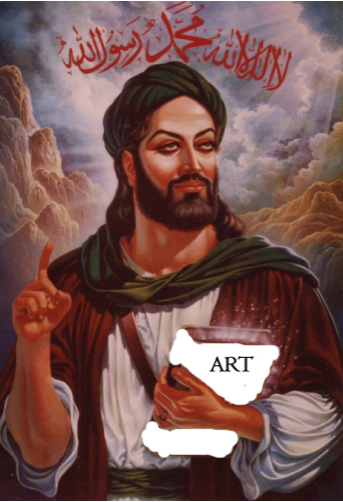
The Mullah Protection Racket


One has to admire the mullah protection racket: say anything against the Big Mullah and we kill you. Now there’s a secure religion, one confident in itself. Is it just me or do the muzzle-mouths have a particularly weak self-image? It seems the whole religion is built around the fear of being known as gay. As if the whole Muslim world turns around its inability to handle sex. Does it have something to do with the desert air? What’s wrong with Arab guys that they should feel themselves A) inadequate, and B) uncontrollable? I don’t know that I’d want to admit that to the world, much less advertise it.

I don’t want to castigate the entire Muslim world for being namby-waists and fop-dolls, but those little guys running around in their nightgowns and Balishnikovs could stand a shipment of flashlights because they aren’t too bright. They’re giving a bad name to troglodytes.

Nonetheless, the current attack on the US embassy in Lybia which killed the ambassador and three other people, illustrates how far we are from addressing the problem. Ostensibly, the attack was reprisal for something derogatory said about Mohammed, not the boxer, the prophet. The response, as I hear it, falls into two camps: A) you gotta be careful tip-toeing around those Moslems, because they’re touchy; and B) those weren’t real Muslims, real Muslims don’t kill for that reason. As to “A,” it’s true, ya gotta be careful around them, they’re uncontrollable, they’ve already told you that. Whether or not that’s reasonable is an entirely separate question, but there’s no doubt they’re a weird bunch.

But “B”? Naw, I’m not buying B. They were real Muslims. Just like the Christians who kill abortion doctors; they’re real Christians, too. Definitely one of the hardest concepts to get through a Christian’s head is that there is no such thing as an unreal Christian. Can’t be. Religions are made up institutions; one can’t have an unreal vision of what they are. Everyone gets to make up their own version and they are all equally Christian. Being Christian is a self-definition. If you say you’re one, you’re one. End of argument. Likewise with Muslims; you say you’re one, you’re one. End of argument.

The problem is that as a society we have yet to confront what it means to still have a majority of our population believing in fantasies. From a psychological standpoint, this is not good. Mother Terresa notwithstanding, not being able to separate reality from fantasy in an adult population portends trouble. Until we can understand the dangers which religions present us, we’ll never get a handle on controlling them. We’ll always be at the mercy of fanatics who are “touchy.”

Friday, August 10, 2012

The Skeptic In Me

I found the debate on the Skeptic website. The debaters aren’t important, except that one of them was Shermer, the Skeptic guy. (Too bad “skeptic” sounds so much like “septic.”) The debate was, “Has science made religion irrelevant?” It was a two-hour debate and I didn’t get through but forty-five minutes before I had to go to sleep.
What makes me leery is that I found the debate on the Skeptic site, so how objective could it be? Am I right to be skeptical? Not that I disagreed with Mr. Shermer, but I wondered about the quality of the opponents, were they the best he could find?

If I can characterize the pro-religion arguments, one proposed that there is more than one kind of knowledge, and the other posited that there is a lot science doesn’t know know. Now, both statements are prima facie true, but neither a priori demonstrates the relevance of religion.

Taking the knowledge argument first, the fellow could have had a point. He could have talked about emotional understanding, he could have talked about spiritual reverence for the universe, he could have talked about the educational and societal values of folk tales as allegory. Instead, he tried to argue that miracles happen. Really, that’s what he did. He tried to argue that A) there’s nothing to say God can’t put aside the laws of physics whenever he (it’s always a “he” for these folk) wants; and B) because miracles only happens one at a time at the will of God, there’s no way to scientifically test them. Furthermore, if you didn’t buy that argument, he’s witnessed miracles himself. So there. Are you going to call him a liar?

Or delusional? The third option is that he’s telling the truth, but, of course, there’s no way to verify that. Furthermore, there’s no way for him to tell if he’s delusion or simply misinterpreting data. But, to accept the third option requires a belief in its possibility. And because of the inability to test the proposition of miracles, it’s the same as believing in God. And it has the same value in a debate: none. One can’t argue that miracles are true because they’ve witnessed them; it’s that the old circular argument. It’s no more valid than saying the Bible is true because it’s the word of God.
Which is why I was suspicious of him as a choice; was he chosen because he’s an easy target and doesn’t mind humiliation, or do his delusions extend to his intelligence?

I didn’t listen to all the second pro-religion fellow’s speech, but his opening drift was that there were enormous questions for which science has no answer, such as what came before the Big Bang? Now, that’s a fairly common argument, although relatively recent as it couldn’t have been put forth before science discovered the Big Bang in the first place. It’s conceding the argument before it’s begun. As soon as one accepts the Big Bang, God becomes irrelevant. Sorry, just does. Science is the process of discovery and to say that religion is free to guess about what’s left, is true but in itself irrelevant.

Still, it’s another case of missed argument. While there’s no way to justify religious interpretation of physical reality, because religion is still so important to so many people, an understanding of religion and the psychology of religious belief is crucial to understand the world. But, of course, that’s not what he was arguing. He was arguing that, despite religion being wrong about all other physical realities, it could still be right about what we don’t yet know about. Got that? It’s a tad convoluted.

Again, while that’s logically true, it’s also irrelevant. It’s the sort of argument one should never bring up if they want to look like they’ve eaten their Wheaties.
The question is: were these pro-god guys thrown to the lions because they were schlemiels, or are they the best the believers have to offer? My suspicion is they’re the guys who like to take the bait and who think they can win the argument head-on. I want to say it’s a waste of talent, but obviously it isn’t.

The issue is: no one ever comes to religion logically. That’s not the path. They come to religion through a personal experience they believe holds its own truth and they unite with others of a like mind, just as people who believe they’ve been taken up in spacecrafts by little green, probing men tend to flock together. It’s a belief to which logic is irrelevant.

Did science make religion irrelevant? Did football make golf irrelevant? Did the automobile make walking irrelevant? Did irrigation make praying for rain irrelevant?

Science? Religion? They’re different fish; they don’t swim in the same waters. Sometimes believer fish want to swim in the science waters, but it doesn’t work; they die there. Nothing makes religion irrelevant other than personal experience. Either the light strikes you and you see, “Oh, that’s how it works!” or it strikes you and you proclaim, “It’s a miracle!” Either way, it’s your experience and yours alone. Take it out in the night and look for an honest man; see what you can find.

Pray that you're not a young child.

Sunday, April 15, 2012

Can Religion Be Saved?


Stolen Aart
Wouldn’t It Be Nice?

We have to help them, our Christian brothers and sisters, we really do. They are in a precarious position. Their world is crumbling around them. Heathens are loose upon the fields. The End of Days is surely near.

Or not.

It’s not just Christianity, of course, the Enlightenment takes its aim at everyone. Science has fierce partisans and factions, but it has no sects. (About cults, we’re not so sure.) But my personal world is curiously devoid of Muslims, Jains, or Hindus and is mainly peppered with a few Jews and a slew of New Agers. My knowledge of religion is fairly restricted to Christianity, American style, and people who believe in homeopathy and aroma therapy. Those are the people I’d most like to help, but everyone else could use it, as well.
That being said, I have absolutely no idea how to go about helping them. The Christians. As the first rule of psychology has it (or possibly it’s the twelfth), one has to recognize the need for help before one is able to accept it. My read is that Christians, because of their continuing numerical dominance, aren’t yet aware they’re losing the fight for the heart and soul of the future. They’re still in the stage of denial.

So, what to do?

How about if we begin by removing religion from the political arena? Wouldn’t that be nice? Could we have freedom, not just of religion, but from religion? Wouldn’t that be nice? Is there any way for Christians to understand that there are ten thousand religions in the world; and that, if we base our morality on “God says so,” we’ll never come to any agreements? Wouldn’t that be nice?

What would happen if one Sunday morning every pastor in the land went before her or his congregation and said, “We are not a Christian nation, we are a nation of all faiths or lack thereof; we must learn to be Christians in a pluralistic world”? What if all the pastors told the truth?

Wouldn’t that be nice?

Well, you can see where that would lead: fornication and drug use, gluttony and sloth. The Four Horsemen would terrorize the nation. Communism!

No, the Christian community is not about to talk compromise. They’re in it for the long haul. They started out in little cells in the catacombs and they’re willing to retreat there if they have to. They’ll reluctantly talk to the Jews, they wouldn’t think of talking to a Muslim, and they have no idea what language the rest of the world speaks. That their world continues to fade, that peace, rationalism, acceptance, and atheism continue to grow, has yet to sink in. That their fate was sealed by the inevitable evolution of consciousness, passes their consciousness by. Helping them over that hump is going to be a big hurdle. It’s like trying to talk to a Cajun gone mad with a shotgun in his hand. You best be careful. Real careful.

But we gotta do it; it’s our duty. It’s the rational thing to do. It’s no point getting mad at them, and ridicule doesn’t help, at all. We have to find a way to open the dialogue. They aren’t going to do it; they have no cause to. They still think they have a chance at winning. It’s our job to save them from as much damage as possible, to find a way to let them down easy.

How about “Take a Christian to Lunch Day”? You don’t even have to worry about mixing milk with meat with Christians, they can eat anything. And drink, too. Don’t forget Jesus and the wine trick. You just can’t smoke with them; that’s with the Saracens.

Maybe we should start with comparative religion classes in the public schools. Teach religion as part of folk arts where it truly belongs. Heck, that could start in kindergarten. By high school, kids could be studying the role of religions in society and history. They could study the varieties of myths that underlie religions. Once we had a public educated about religions, then, maybe, we could have a national dialogue about the rightful place of religion, folk beliefs, and traditional cultures in our society. We, certainly, don’t want to lose the rich heritage of how the peoples of the world solved the mysteries of leaving the dream time. These beliefs, these longings, go back to before people were people; it would be a shame to dismiss them simply because of their naiveté. Losing them, we would lose the beauty of their allegory; we would lose the nuance of their experience.

We must save these religions, now, before they’re swamped by the flutter of tomorrow. Before they’re lost in the flight of new wings. Like folk music or quilt patterns, the varieties of religious experience must be preserved lest we forget one day that people once talked in tongues. Or fed the hungry. Or wore white robes with pointed hoods. It’s now that we should start talking with the preachers and priests who remain about what and how best to preserve their memory on the landscape of the stars. We should start now, while they still feel their power. Soon, it will be too late. Soon, the sweat and fog of panic will cloud their minds. We should start assuring them now that we will always love them, they will always find a place in our hearts and our community. We will remember them. We will not forget.

Thursday, March 15, 2012

Deliver Us from Evil

A Documentary about Oliver O’Grady
Catholic Priest and Pedophile
Currently at Large in Ireland


But is it? Evil? Is the problem the Catholic Church? Is the problem ever the church? Any church?

Is our problem with the Muslims, the Mormons, the Fundamentalists, or the Jews? The Jains, the Buddhists, the Hindus, or Voudoun?

Should we be concerned about the Unitarians?

What should be done with Oliver O’Grady? Hundreds of children? Their mothers? What should be done with Bishop Mahoney (who protects pedophiles) or the Pope?

What should be done about people who blow themselves up, just to kill you? Is there a source for evil? Is there a source for good? What is evil and what is good? How does a person do one or the other? Who is judging? What are the rules?

It’s not so easy, is it?

It begins with babies, no? Either they start out evil or something along the way makes them do evil things. Either they have crossed wiring or bad chemistry, or experience taught them evil was the best solution.

But then, is it evil if they think it’s the best response available? When we confront evil, our instinct is to punish it. Besides correct it, of course.

We rarely look beyond our instinct. Punishment gives us satisfaction, it gives us revenge, which is what we want. We have been injured and we want someone to pay for it. We want, at the very least, the satisfaction of revenge.

That’s usually where we stop thinking. We rarely ask, do we want to change the evil behavior? Do we want to protect our society from evil?

As to the first question, we don’t have much interest in that other than how it relates to the second question. We mainly care about evil when it affects us. We’re only interested in redemption so far as it offers us protection. Unfortunately, instead of redemption we offer more incarceration. We’re more willing to try deterrent than reform, which may be an economic response rather than a rational response.

But punishment, aside from the satisfaction, implies that those babies had a choice about their wiring or their life experience. I don’t know about that; I just don’t know. My gut feeling says that, when evil shows up, something went wrong. Some connections were loose or somebody got a bad education.

How willing a choice did Father O’Grady make? It’s true, he molested hundreds of people, both sexes; and it’s true, he disassociates himself from his crimes (at one point he wanted to have all his victims—in California—come to Ireland together so he could say he was sorry); but what kind of punishment makes sense? Whipping? Stocks? Emasculation? Throw him in a hole at our expense?

Or the Church? What should we do about the Church? Were they not complicit? Didn’t they hide him and shelter him? Didn’t they sexually abuse him when he was a child?

What about his brother or his sister with whom he had sex? Are they complicit, too? What should we do about them?

It gets sticky, doesn’t it?

A suggestion, if you will:

Regardless of the origins of O’Grady’s evil, it was able to spread and go on for so long and still be protected, because of the authority and power of the Catholic Church. Yet the Catholic Church is only one of many churches and mosques and synagogs that operate in essentially the same way: they all require a suspension of rational observation in favor of faith-based belief. The crucial element is not in what you believe, but rather that you are willing to believe in the irrational. The goal is to get you to give up your powers of observation in favor of the party line (herd instinct). Once you believe in the unbelievable, you’ll believe in anything. And once you believe in the unbelievable, you are united with all other people who share the same belief; and those who don’t are your enemies. That’s a vital power for any oligarchy to have over its tribe. It’s so powerful it’s universal and ancient.

What it leads to—and one sees this time and again in the documentary—is people, unthinkingly giving their powers of observation over to other people, to designated authorities. These people really believe in the cloak of piety. These people invited Father O’Grady into their homes to rape their children. They couldn’t believe God could be the source of evil.

That’s the same God who sends children strapped with bombs into crowded marketplaces or sends teenage girls into polygamous marriages or butchers homosexuals. Once they believe…

Can anything be done about it?

Well, not very quickly. We could start by talking about religion. We could put two and two together and see how religion runs as a common theme through so many of our national and international problems that we might want to start taking a closer look at the role religion plays in our communities.

We could start in the schools. We could start in the grade schools. We could have comparative religion taught from kindergarten on. We could teach little kids about the many varieties of faith as an element of culture, and we should treat it as a folk art, along with songs, dances, art, etc. We could teach little kids about the differences between belief and non-belief. As they got older, we could teach students about the role of religion in society; how different societies incorporate religion into their structure. How, for example, does religion affect international alliances? How do religious charities affect the government’s need to supply social programs? Why are some religious issues settled at the ballot box?

Is there any chance of this?

No.

But it would be a good start. And, I believe, it would work. But, then again, I believe in the Enlightenment and I believe in the Emancipation Proclamation. What a fool I am.

On the other hand, I’ve got two things going for me: time and truth. Time will tell.